
Is your internet connection slower than a snail crawling uphill? You’re not alone! Many people struggle to find the perfect router for their Verizon Fios service. Picking the right one can feel like navigating a maze, with confusing specs and a sea of choices. You want fast speeds and a reliable connection, but where do you even begin?
Choosing the wrong router can lead to frustrating buffering, dropped connections, and a general feeling of digital dread. It’s a common pain point for Fios customers who just want their internet to *work* without a headache. But don’t worry, there’s good news!
By the end of this post, you’ll understand the key things to look for in a Fios router. We’ll break down the jargon and help you identify the best options for your home. Get ready to say goodbye to slow internet and hello to a smoother, faster online experience!
Top Router Fios Recommendations

- DUAL-BAND WIFI 6 ROUTER: Wi-Fi 6(802.11ax) technology achieves faster speeds, greater capacity and reduced network congestion compared to the previous gen. All WiFi routers require a separate modem. Dual-Band WiFi routers do not support the 6 GHz band.
- AX1800: Enjoy smoother and more stable streaming, gaming, downloading with 1.8 Gbps total bandwidth (up to 1200 Mbps on 5 GHz and up to 574 Mbps on 2.4 GHz). Performance varies by conditions, distance to devices, and obstacles such as walls.
- CONNECT MORE DEVICES: Wi-Fi 6 technology communicates more data to more devices simultaneously using revolutionary OFDMA technology
- EXTENSIVE COVERAGE: Achieve the strong, reliable WiFi coverage with Archer AX1800 as it focuses signal strength to your devices far away using Beamforming technology, 4 high-gain antennas and an advanced front-end module (FEM) chipset
- OUR CYBERSECURITY COMMITMENT: TP-Link is a signatory of the U.S. Cybersecurity and Infrastructure Security Agency’s (CISA) Secure-by-Design pledge. This device is designed, built, and maintained, with advanced security as a core requirement.


- FASTER, FARTHER, MORE RELIABLE WIFI: A dedicated tri-band WiFi 7 router with a third high-speed band for demanding devices, built to keep up as your connected home grows with streaming, video calls, gaming, and smart home devices.
- WORKS WITH YOUR EXISTING INTERNET SERVICE: Pairs with your existing modem or gateway via ethernet. Compatible with most cable, fiber, DSL, and satellite providers. Some gateways and modem router combos may require bridge mode. No coax needed.
- SET UP AND MANAGE YOUR NETWORK WITH THE NIGHTHAWK APP: Download the free Nighthawk app on iOS or Android for guided setup. Manage WiFi, run speed tests, pause devices, and set up guest networks from anywhere. Active internet required.
- WIFI 7 THAT KEEPS UP WITH A BUSY HOME: Up to 9.3 Gbps across 2.4 GHz, 5 GHz, and 6 GHz bands, 2.4x faster than WiFi 6. The added 6 GHz band gives your fastest devices their own lane so nothing slows down. Real-world speeds depend on your devices and plan.
- COVERAGE IN EVERY ROOM: Delivers up to 2,500 sq. ft. of coverage for up to 100 devices. Walls, floors, and interference can reduce range. Larger or multi-story homes may benefit from a NETGEAR Orbi mesh WiFi system.
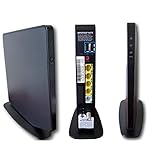
- AC1750 dual-band Wi-Fi for Verizon Fios plans
- 4 Gigabit Ethernet ports for wired devices
- 3x3 MIMO for strong, reliable coverage
- MoCA 2.0 uses coax to extend network
- Supports Wi-Fi 5 (802.11ac) technology

- The latest Wi-Fi generation, Wi-Fi 6 (802.11 ax) with speeds averaging 60% faster on 2.4 GHz and 38% faster on 5 GHz than previous Verizon Wi-Fi routers*
- Tri-band 4x4 antennas, increasing Wi-Fi coverage by an average of 63%*
- 4 Gigabit LAN + 1 Gigabit WAN, MoCA2.5 + LAN MoCA1.1 WAN
- Automatic Band switching between 2.4GH and 5.8GH Band and 150% more Wi-Fi range than G1100
- Self-Organizing Network technology for automatic band steering and single Wi-Fi Network name

- Dual-band Wi-Fi with 5 GHz speeds up to 867 Mbps and 2.4 GHz speeds up to 300 Mbps, delivering 1200 Mbps of total bandwidth¹. Dual-band routers do not support 6 GHz. Performance varies by conditions, distance to devices, and obstacles such as walls.
- Covers up to 1,000 sq. ft. with four external antennas for stable wireless connections and optimal coverage.
- Supports IGMP Proxy/Snooping, Bridge and Tag VLAN to optimize IPTV streaming
- Access Point Mode - Supports AP Mode to transform your wired connection into wireless network, an ideal wireless router for home
- Advanced Security with WPA3 - The latest Wi-Fi security protocol, WPA3, brings new capabilities to improve cybersecurity in personal networks

- Wave 2 Wireless Internet Router: Achieve up to 600 Mbps on the 2.4GHz band and up to 1300 Mbps on the 5GHz band. Dual-band WiFi routers do not support the 6 GHz band. Performance varies by conditions, distance to devices, and obstacles such as walls.
- OneMesh Compatible Router- Form a seamless WiFi when work with TP-Link OneMesh WiFi Extenders.
- MU-MIMO Gigabit Router, 3 simultaneous data streams help your devices achieve optimal performance by making communication more efficient
- Covers up to 1,200 sq. ft. with beamforming technology for a more efficient, focused wireless connection.
- Full Gigabit Ports: Create fast, reliable wired connections for your PCs, Smart TVs and gaming console with 4 x Gigabit LAN and 1 x Gigabit WAN. No USB Port

- NIGHTHAWK WIFI 6 ROUTER FOR YOUR WHOLE HOME: Delivers fast, reliable WiFi across every room of your apartment or small home for streaming, gaming, video calls, and smart home devices, all running at the same time without slowing each other down.
- WORKS WITH YOUR EXISTING INTERNET SERVICE: Pairs with your existing modem or gateway via ethernet. Compatible with most cable, fiber, DSL, and satellite providers. Some gateways and modem router combos may require bridge mode. No coax needed.
- SET UP AND MANAGE YOUR NETWORK WITH THE NIGHTHAWK APP: Download the free Nighthawk app on iOS or Android for guided setup. Manage WiFi, run speed tests, pause devices, and set up guest networks from anywhere. Active internet required.
- READY FOR THE DEVICES YOU ALREADY OWN: Your phones, laptops, and TVs work right out of the box. WiFi 6 delivers speeds up to 1.8 Gbps across 2.4 GHz and 5 GHz bands. Backward compatible with WiFi 5 and earlier.
- COVERAGE IN EVERY ROOM: Covers up to 1,500 sq. ft. for up to 20 connected devices. Walls, floors, and interference can reduce range. Larger or multi-story homes may benefit from a NETGEAR Orbi mesh WiFi system.

- 𝐅𝐮𝐭𝐮𝐫𝐞-𝐑𝐞𝐚𝐝𝐲 𝐖𝐢-𝐅𝐢 𝟕 - Designed with the latest Wi-Fi 7 technology, featuring Multi-Link Operation (MLO), Multi-RUs, and 4K-QAM. Achieve optimized performance on latest WiFi 7 laptops and devices, like the iPhone 16 Pro, and Samsung Galaxy S24 Ultra.
- 𝟔-𝐒𝐭𝐫𝐞𝐚𝐦, 𝐃𝐮𝐚𝐥-𝐁𝐚𝐧𝐝 𝐖𝐢-𝐅𝐢 𝐰𝐢𝐭𝐡 𝟔.𝟓 𝐆𝐛𝐩𝐬 𝐓𝐨𝐭𝐚𝐥 𝐁𝐚𝐧𝐝𝐰𝐢𝐝𝐭𝐡 - Achieve full speeds of up to 5764 Mbps on the 5GHz band and 688 Mbps on the 2.4 GHz band with 6 streams. Enjoy seamless 4K/8K streaming, AR/VR gaming, and incredibly fast downloads/uploads.
- 𝐖𝐢𝐝𝐞 𝐂𝐨𝐯𝐞𝐫𝐚𝐠𝐞 𝐰𝐢𝐭𝐡 𝐒𝐭𝐫𝐨𝐧𝐠 𝐂𝐨𝐧𝐧𝐞𝐜𝐭𝐢𝐨𝐧 - Get up to 2,400 sq. ft. max coverage for up to 90 devices at a time. 6x high performance antennas and Beamforming technology, ensures reliable connections for remote workers, gamers, students, and more.
- 𝐔𝐥𝐭𝐫𝐚-𝐅𝐚𝐬𝐭 𝟐.𝟓 𝐆𝐛𝐩𝐬 𝐖𝐢𝐫𝐞𝐝 𝐏𝐞𝐫𝐟𝐨𝐫𝐦𝐚𝐧𝐜𝐞 - 1x 2.5 Gbps WAN/LAN port, 1x 2.5 Gbps LAN port and 3x 1 Gbps LAN ports offer high-speed data transmissions.³ Integrate with a multi-gig modem for gigplus internet.
- 𝐎𝐮𝐫 𝐂𝐲𝐛𝐞𝐫𝐬𝐞𝐜𝐮𝐫𝐢𝐭𝐲 𝐂𝐨𝐦𝐦𝐢𝐭𝐦𝐞𝐧𝐭 - TP-Link is a signatory of the U.S. Cybersecurity and Infrastructure Security Agency’s (CISA) Secure-by-Design pledge. This device is designed, built, and maintained, with advanced security as a core requirement.
Your Guide to Choosing the Best Router for Fios
Getting Fios internet is exciting! You want a router that works well with your Fios service. This guide will help you pick the perfect one. We’ll look at what makes a good router and answer your common questions.
Key Features to Look For
Speed and Bandwidth
Your Fios plan has a certain speed. Your router needs to match it. Look for routers that support the latest Wi-Fi standards like Wi-Fi 6 (802.11ax). This means faster speeds and more devices can connect without slowing down.
Number of Ethernet Ports
Ethernet ports let you plug devices directly into the router with a cable. This is great for gaming consoles or computers that need a super stable connection. More ports mean you can connect more wired devices.
Dual-Band or Tri-Band
Most routers are dual-band. They use a 2.4 GHz band for longer range and a 5 GHz band for faster speeds. Tri-band routers add another 5 GHz band. This helps spread out devices and reduces traffic jams, making your Wi-Fi smoother.
Security Features
A good router keeps your network safe. Look for features like WPA3 encryption, a firewall, and guest network options. These protect your personal information from hackers.
Ease of Setup and Management
You don’t want to spend hours setting up your router. Many routers come with easy-to-use mobile apps. These apps let you set up your network, check speeds, and manage connected devices easily.
Important Materials and Build
Routers are mostly made of plastic. The quality of the plastic matters. Sturdy plastic means the router will last longer. Inside, the important parts are the chips and antennas. Better chips mean better performance. Good antennas help the Wi-Fi signal reach further.
Factors That Improve or Reduce Quality
Improving Quality
- Latest Wi-Fi Standards: Routers with Wi-Fi 6 or Wi-Fi 6E offer the best performance.
- Powerful Processor: A strong processor helps the router handle many devices and tasks at once.
- Good Antennas: Internal or external antennas can boost signal strength and range.
- Firmware Updates: Manufacturers who regularly update their router’s software keep it secure and performing well.
Reducing Quality
- Outdated Wi-Fi Standards: Older routers (like Wi-Fi 4 or 5) will limit your Fios speed.
- Weak Processor: A slow processor can cause lag and dropped connections.
- Poorly Placed Antennas: If antennas aren’t designed well, the signal might be weak.
- Lack of Updates: Routers that don’t get updates can become insecure and slow.
User Experience and Use Cases
A good router makes your internet experience smooth. You can stream movies without buffering, play online games without lag, and video call your friends and family clearly. For families with many devices, a router that handles lots of connections is key. For gamers, a stable, fast connection is a must. For smart home users, a router that can connect many devices is important.
If you work from home, you need a reliable connection for video conferences and uploading files. A router with strong security will protect your work data. Choosing the right router means you get the most out of your Fios internet.
Frequently Asked Questions (FAQ) about Router Fios
Q: Do I need a special router for Fios?
A: You don’t always need a special router. Many modern routers work well with Fios. However, you need a router that can handle the speeds your Fios plan provides. Some Fios plans might work best with routers that support certain technologies, like Gigabit Ethernet.
Q: Can I use my own router with Fios?
A: Yes, you can use your own router with Fios. You will need to disable the Wi-Fi on the Fios router provided by Verizon or put it in bridge mode. Then, you can connect your own router.
Q: What is the best Wi-Fi standard for Fios?
A: Wi-Fi 6 (802.11ax) is the current best standard for Fios. It offers faster speeds and better performance, especially when you have many devices connected.
Q: How many Ethernet ports do I need?
A: This depends on how many devices you plan to connect with a cable. For most homes, 3-4 Ethernet ports are enough. If you have many gaming consoles or computers that need wired connections, look for routers with more ports.
Q: Is a dual-band or tri-band router better for Fios?
A: A tri-band router can be better if you have a lot of devices. It helps spread them out, reducing congestion and improving speeds for everyone. For smaller households, a good dual-band router is often sufficient.
Q: How do I set up my own router with Fios?
A: You will typically connect your router to the Fios internet service. You might need to access your Fios router’s settings to turn off its Wi-Fi or put it in bridge mode. Then, follow your new router’s setup instructions.
Q: What does “Gigabit” mean for a router?
A: “Gigabit” refers to the speed of the Ethernet ports. A Gigabit Ethernet port can handle speeds of up to 1000 megabits per second (Mbps). This is important for fast Fios plans.
Q: How far should my router be from my Fios equipment?
A: Your router should be placed in a central location in your home, away from obstructions like thick walls or metal objects. It doesn’t need to be right next to your Fios equipment, but the connection between them (usually an Ethernet cable) should be secure.
Q: What is the difference between a modem and a router?
A: A modem connects your home to the internet service provider (like Fios). A router creates a Wi-Fi network in your home and allows multiple devices to share the internet connection.
Q: Can a bad router slow down my Fios internet?
A: Yes, a router that is too old or not powerful enough can definitely slow down your Fios internet. Even if Fios is providing fast speeds, a weak router can’t deliver them to your devices.

Hi, I’m Larry Fish, the mind behind MyGrinderGuide.com.. With a passion for all things kitchen appliances, I created this blog to share my hands-on experience and expert knowledge. Whether it’s helping you choose the right tools for your culinary adventures or offering tips to make your kitchen more efficient, I’m here to guide you. My goal is to make your time in the kitchen not only easier but also enjoyable! Welcome to my world of kitchen mastery!