
As an Amazon Associate I earn from qualifying purchases.
Choosing a 100 Watt Solar Panel means balancing portability, charging connections, available space, and resistance to outdoor conditions. A fixed panel may suit an RV or off-grid system, while a foldable model makes more sense for travel.
Pay attention to cell design and stated efficiency, but also check the panel’s physical format, connectors, mounting features, and weather protection. Those details affect how easily you can install, carry, and use it.
These five picks were selected from the listed features, with each serving a different use rather than repeating colour or size variants. The selection includes fixed panels, portable designs, a compact option, and a model with built-in charging ports.
Use the roundup to compare each panel’s strongest feature, then match it to your space, power station, battery setup, or charging habits.
Our Top 5 100 Watt Solar Panel Picks at a Glance
| Product | ||
|---|---|---|
 |
Rvpozwer 100W 18BB N-Type Solar Panel High-efficiency off-grid setups |
Check Price |
 |
Renogy 100W N-Type Portable Solar Panel Portable power stations |
Check Price |
 |
Mesuvida 100W Portable Solar Panel Direct USB charging |
Check Price |
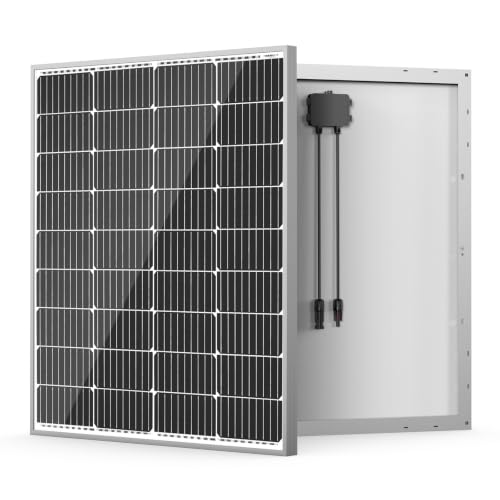 |
HQST 100W 12V Compact Solar Panel Tight mounting spaces |
Check Price |
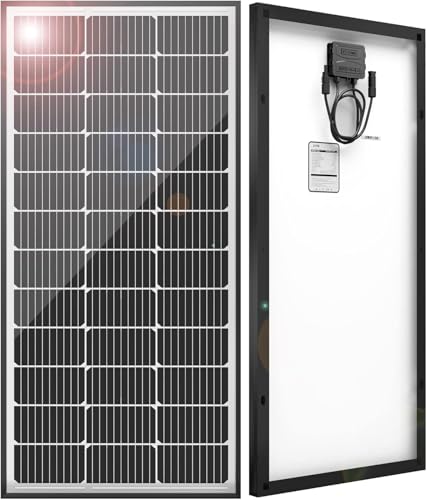 |
JJN 100W 10BB Monocrystalline Solar Panel Weather-exposed installations |
Check Price |
Top 5 100 Watt Solar Panel: Detailed Reviews
1. Rvpozwer 100W 18BB N-Type Solar Panel
The Rvpozwer 100 Watt Solar Panel uses 18BB N-type monocrystalline cells and a stated 25% efficiency, making it a sensible choice for performance-focused RV, marine, rooftop, farm, and other off-grid installations. Its high-purity silicon and multi-layer lamination are designed to make better use of available sunlight, while the IP68-rated junction box resists dust, rain, snow, and low-pressure water spray. Cured solar glass, a weather-resistant coating, and 2400Pa shock resistance support outdoor use. Pre-installed diodes, wires, and rear mounting holes simplify installation.
What We Like:
- The stated 25% efficiency suits installations where available panel space matters.
- 18BB N-type cell technology targets efficient off-grid performance.
- The IP68 junction box adds protection against dust and wet weather.
- Cured solar glass and a weather-resistant coating support outdoor placement.
- Pre-installed wires and rear holes make mounting more straightforward.
What Could Be Improved:
- You need to inspect the panel every two weeks and remove leaves, bird droppings, or other obstructions.
- Its 100W rating still depends on suitable sunlight and cannot guarantee a fixed level of output.
- The product is aimed at installed setups, so it may be less convenient if you need a portable panel for frequent relocation.
Buy it if you want a durable, performance-focused panel for an RV, boat, rooftop, farm, or other mostly fixed installation, especially where panel efficiency matters. Skip it if you need a compact portable option or prefer a setup requiring minimal routine inspection and cleaning.
2. Renogy 100W N-Type Portable Solar Panel
The Renogy 100 Watt Solar Panel is a foldable, lightweight option for charging compatible power stations during camping, RV trips, or emergencies. Its N-Type cells and 16BB design deliver claimed 25% conversion efficiency, while parallel wiring helps limit the effect of individual shadows. At 8.86 pounds, it folds to 20.6 x 24.6 x 1.6 inches and uses kickstands for positioning. IP67 protection and a hail-resistant ETFE coating suit outdoor use, while USB-C PD and two USB-A ports allow direct device charging.
What We Like:
- At 8.86 pounds, it is 19% lighter than a standard portable solar panel.
- The folded dimensions make storage easier in an RV or camping setup.
- USB-C PD and two USB-A ports let you charge devices without relying solely on a power station.
- The kickstands help you angle the panel toward the sun.
- N-Type cells, ETFE coating, and IP67 protection support outdoor use.
What Could Be Improved:
- Even at 8.86 pounds, it remains a noticeable item to carry with camping gear.
- USB charging is limited to 45W through USB-C and 18W or 15W through the USB-A ports.
- The foldable design requires open space and setup time before it can collect power.
Buy this Renogy panel if you want a portable option for compatible power stations, direct device charging, and outdoor trips where easy storage matters. Skip it if you need a permanently mounted panel, dislike carrying 8.86 pounds, or require higher direct USB output.
3. Mesuvida 100W Portable Solar Panel
The Mesuvida 100 Watt Solar Panel is a foldable charger built for direct device and portable power station use. Its USB-C port supports PD 65W, giving compatible laptops such as the MacBook Air a practical charging option, while two USB-A ports, DC, and MC4 connections cover phones, accessories, and small power stations. A 24% conversion rate supports efficient charging, and the adjustable kickstand helps you angle the panel. At 7.5 pounds with a built-in handle, it remains manageable for camping or road trips.
What We Like:
- USB-C PD 65W can directly charge compatible laptops and power stations.
- Two USB-A ports make direct phone and accessory charging convenient.
- The DC and MC4 connections broaden compatibility with power stations and solar setups.
- The adjustable kickstand helps you position the panel toward the sun.
- Parallel and series connection support can expand a setup with additional panels.
What Could Be Improved:
- At 7.5 pounds and about 22.8 by 19.7 inches when folded, it is portable but not especially lightweight or compact.
- IPX4 water resistance suits light exposure, but you should not treat it as fully weatherproof.
- The package contents do not list a carrying case, so you may need separate protection during transport.
Buy this panel if you want one foldable charger for direct USB charging, laptops, and compatible power stations, especially when MC4 expansion matters. Skip it if you need a very light packable panel, a carrying case, or protection for sustained heavy rain and harsh weather.
4. HQST 100W 12V Compact Solar Panel
The HQST 100 Watt Solar Panel is a compact square monocrystalline panel for RV roofs, camper vans and other tight mounting areas. Its 31.8 x 27.5 x 1.18-inch format uses 11% less space than traditional panels, while Grade A+ cells and up to 23% conversion help make the most of the available roof area. Pre-drilled mounting holes simplify installation. The panel also handles 2400Pa wind loads and 5400Pa snow loads, with IP65-rated connectors and junction box protection for outdoor use.
What We Like:
- The compact square design suits limited RV roofs and confined mounting spaces.
- Grade A+ cells and up to 23% conversion make efficient use of the panel area.
- Pre-drilled holes allow faster, more secure mounting.
- A 2400Pa wind-load rating and 5400Pa snow-load rating support exposed installations.
- The five-year product assurance and stated 80% output retention after 25 years add long-term reassurance.
What Could Be Improved:
- Its 100W output may be limiting if you need to run several power-hungry appliances or recharge batteries quickly.
- The product information does not mention portable handling, built-in USB charging or included cables, so it is better suited to fixed installations than grab-and-go use.
- IP65 protection covers the connectors and junction box, but the stated features do not describe complete system waterproofing.
Buy this HQST panel if you need a space-conscious, permanently mounted option for an RV, camper or compact off-grid setup, especially where wind and snow exposure matter. Skip it if you want direct USB charging, a portable panel, or more power from a single panel for heavy electrical loads.
5. JJN 100W 10BB Monocrystalline Solar Panel
The JJN 100 Watt Solar Panel suits weather-exposed RV, camping, and off-grid installations where dependable energy production matters. Its 10BB monocrystalline cells and claimed 23% conversion rate are designed to make better use of available sunlight, while the IP68 rating helps protect the panel in wet conditions. A black, corrosion-resistant aluminium frame adds durability, and the panel is rated for 2100Pa wind loads and 5100Pa snow loads. Pre-drilled mounting holes should simplify fitting it to a suitable surface.
What We Like:
- 10BB cells support efficient, reliable power generation.
- The IP68 rating provides strong protection against water and dust.
- Corrosion-resistant aluminium framing suits outdoor, long-term use.
- Pre-drilled holes make installation more straightforward.
- A transferable 30-year power-output warranty adds long-term reassurance.
What Could Be Improved:
- Its framed design is better suited to permanent mounting than quick campsite setup.
- The listing does not describe integrated USB outputs, so you will need compatible charging equipment.
- You must provide a suitable mounting surface and installation hardware for your setup.
Buy this panel if you need a durable, permanently mounted 100 Watt Solar Panel for an RV, cabin, or other weather-exposed installation. Its 10BB cells, IP68 protection, and corrosion-resistant frame make it a practical choice for outdoor use. Skip it if you want a lightweight portable panel or direct USB charging.
How to Choose a 100 Watt Solar Panel
Choosing a 100 Watt Solar Panel for Your Setup
Start by matching the panel to how you camp. A 100 Watt Solar Panel can suit small RV electrical systems, portable power stations, and basic charging needs, but your results depend on sunlight, shading, cable losses, and the equipment receiving the power. Decide whether you need a fixed panel for regular trips or a portable model you can reposition during the day.
Check Compatibility Before You Buy
Confirm that the panel works with your charge controller, power station, battery system, or USB devices. Look at the connection type, the controller’s supported input range, and whether you need additional cables or adapters. A panel may produce suitable power yet remain inconvenient if it does not connect directly to your existing gear.
For RV installations, also check the available mounting area and cable route. A panel that fits the roof or a compact mounting space will be easier to install and less likely to interfere with vents, storage hardware, or other equipment.
Consider Portability and Charging Convenience
Portable panels make more sense if you move campsites often or want to place the panel away from the vehicle in the strongest sunlight. Consider the folded or stored size, carrying convenience, and how quickly you can set it up. Direct USB charging can simplify small-device charging, while power-station compatibility may be more useful if you want to run or recharge larger portable equipment.
Assess Build and Weather Exposure
Think about where the panel will spend most of its time. A roof-mounted or outdoor panel needs construction suited to regular exposure, along with a mounting method that can handle your installation. For occasional campsite use, easy setup and storage may matter more than permanent mounting features.
Finally, account for changing conditions. Shade, low sun, dirt, and poor positioning reduce output, so a panel’s nominal wattage is only part of the decision. Choose the option that fits your space, connection system, handling habits, and expected sunlight rather than selecting by wattage alone.
Which 100 Watt Solar Panel Fits You?
The Rvpozwer 100W 18BB N-Type Solar Panel is the best overall pick here for high-efficiency off-grid setups, making it the most broadly suitable choice for serious RV and campsite use. The Renogy 100W N-Type Portable Solar Panel is the best alternative if you mainly recharge portable power stations and value a portable format. Choose the Mesuvida for direct USB charging, the HQST for tight mounting spaces, or the JJN for weather-exposed installations.

Hi, I’m Larry Fish, the mind behind MyGrinderGuide.com.. With a passion for all things kitchen appliances, I created this blog to share my hands-on experience and expert knowledge. Whether it’s helping you choose the right tools for your culinary adventures or offering tips to make your kitchen more efficient, I’m here to guide you. My goal is to make your time in the kitchen not only easier but also enjoyable! Welcome to my world of kitchen mastery!