
As an Amazon Associate I earn from qualifying purchases.
Choosing a Vector Database For Rag resource can be difficult because the books target different programming languages, retrieval methods, and project stages.
Focus on the approach you need first. Python, Java, PostgreSQL, GraphRAG, semantic search, and advanced retrieval each point to a different kind of guide.
These five picks were selected from the listed titles for clear, distinct use cases. The selection prioritises practical introductions, language-specific development, enterprise search, and specialist RAG methods.
This guide covers what sets each book apart, who should choose it, and how the topics fit different AI search projects.
Our Top 5 Vector Database For Rag Picks At A Glance
| Product | ||
|---|---|---|
 |
O’Reilly Vector Databases: A Practical Introduction First-time vector database readers |
Check Price |
 |
BPB Publications Vector Databases And RAG With Python Python developers building RAG |
Check Price |
 |
Production RAG & Vector Databases With Java Java enterprise AI teams |
Check Price |
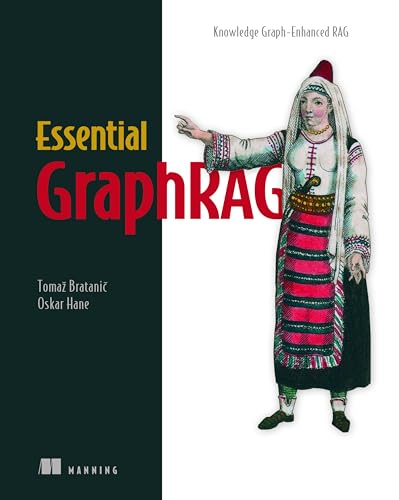 |
Manning Essential GraphRAG Knowledge graph RAG projects |
Check Price |
 |
Advanced RAG Systems Experienced RAG practitioners |
Check Price |
Top 5 Vector Database For Rag: Detailed Reviews
1. O’Reilly Vector Databases: A Practical Introduction
O’Reilly’s Vector Databases: A Practical Introduction is a broad, accessible starting point for understanding vector databases in retrieval-augmented generation. If you are new to a Vector Database For Rag, its practical-introduction focus should help you build a useful mental model before choosing tools or designing an enterprise AI search workflow. The key benefit is orientation: you can approach vector search as a core part of RAG rather than as an isolated database topic. It is best suited to first-time readers who need foundations, not a specialist implementation guide.
What We Like:
- It gives first-time readers a clear entry point into vector database concepts.
- Its practical framing can help connect vector databases with RAG use cases.
- Its broad scope suits readers who need core concepts before implementation details.
- It can provide useful context before you evaluate more specialised RAG resources.
What Could Be Improved:
- It may feel too introductory if you already build RAG systems.
- The available information does not identify specific code examples, integrations, or enterprise deployment coverage, so do not expect a detailed implementation guide.
- Readers seeking a project-specific focus may need a more specialised book.
Buy it if you are new to vector databases, RAG, or enterprise AI search and want a broad starting point. It is also a sensible orientation read before a deeper project-specific book. Skip it if you are an experienced RAG practitioner or need detailed implementation guidance for a particular technology stack.
2. BPB Publications Vector Databases And RAG With Python
Vector Database For Rag learning is the focus of this BPB Publications book, which takes a Python-focused route from embeddings and LLMs to intelligent search and retrieval systems. It suits developers who want to connect these core building blocks rather than approach retrieval as an abstract database topic. The emphasis on Python makes the subject more approachable if that is your working language, while the coverage of vector databases, embeddings, and LLMs gives you a coherent foundation for building RAG-oriented search projects.
What We Like:
- It connects embeddings, vector databases, and LLMs in one Python-focused learning path.
- It targets practical intelligent search and retrieval use cases.
- It should suit Python developers building RAG systems.
- It provides a focused introduction to the technologies behind embedding-based retrieval.
- The English edition is clearly aimed at readers working in English.
What Could Be Improved:
- Its Python focus may be a poor fit for teams building primarily in Java or another language.
- Readers seeking a dedicated knowledge-graph approach may need a more specialised book.
- Experienced RAG practitioners may find this introductory route less suitable for advanced work.
Buy it if you are a Python developer building RAG applications and want a focused route from embeddings to intelligent retrieval. Skip it if your enterprise team works mainly in Java, your project centres on knowledge graphs, or you already have substantial hands-on experience with advanced RAG systems.
3. Production RAG & Vector Databases With Java
Vector Database For Rag: Production RAG & Vector Databases with Java is aimed at enterprise developers building AI search and knowledge-engine applications. Its Java and Spring AI focus gives the book a specific application context, while PGVector points to a PostgreSQL-based approach for storing and searching embeddings. That combination should suit teams already working in the Spring ecosystem and looking for production-oriented guidance rather than a broad database survey. The available details do not confirm its code depth, deployment coverage, or supported software versions.
What We Like:
- It targets Java teams instead of treating RAG as language-agnostic.
- Spring AI focus makes the subject more relevant to Spring-based enterprise applications.
- PGVector connects vector search with a familiar PostgreSQL-oriented stack.
- Enterprise AI search and knowledge engines are explicit use cases.
- Its production focus makes it more relevant than a purely introductory RAG title.
What Could Be Improved:
- It is not the right choice if you need Python, JavaScript, or vendor-neutral implementation guidance.
- The PGVector emphasis may be limiting if your organization has standardized on another vector database.
- The available information does not confirm version coverage, sample-code depth, or deployment detail.
Buy it if you are a Java or Spring AI team planning production-oriented RAG search with PostgreSQL in the architecture. Skip it if you want broad vector-database comparisons, a Python-first workflow, or confirmed details about code examples, deployment, and software-version support.
4. Manning Essential GraphRAG
Essential GraphRAG: Knowledge Graph-Enhanced RAG is a Manning title for teams exploring knowledge graph-enhanced retrieval rather than relying only on similarity search. For a Vector Database For Rag project, that focus can help you evaluate where relationships between entities and documents may improve answer context. Its subject makes it especially relevant to enterprise AI search teams with connected, structured data. However, the supplied product information lists no additional features, so you should verify its coverage of implementation details, code examples, and production deployment before buying.
What We Like:
- It focuses directly on knowledge graph-enhanced retrieval.
- It suits enterprise AI search projects built around connected information.
- It can help you assess alternatives to vector-only retrieval.
- Its specialised scope should be useful for GraphRAG planning.
What Could Be Improved:
- The narrow GraphRAG focus may be less useful for conventional RAG projects.
- No listed features confirm the depth of its code, implementation, or deployment guidance.
- Readers seeking a broad introduction to vector databases may need a different title.
Buy it if you are an experienced RAG practitioner or an enterprise team investigating knowledge graphs for search and retrieval. Skip it if you need a beginner-friendly vector database guide, a general RAG overview, or clearly documented Python or Java implementation coverage.
5. Advanced RAG Systems
Advanced RAG Systems: A Practical Guide to Hybrid Retrieval, Reranking, GraphRAG, Agentic RAG and Evaluation is aimed at experienced practitioners who need to move beyond basic retrieval-augmented generation. As a Vector Database For Rag resource, it covers hybrid retrieval, which combines search approaches; reranking, which helps prioritise more relevant results; agentic RAG, which supports workflows involving agents; GraphRAG, which uses knowledge-graph concepts; and evaluation, which helps you assess system quality. Its breadth makes it useful for planning and refining complex enterprise AI search systems.
What We Like:
- It covers hybrid retrieval and reranking in the same guide.
- GraphRAG coverage suits projects that need knowledge-graph-based retrieval.
- Agentic RAG addresses workflows that involve AI agents.
- Evaluation coverage helps you think beyond simply connecting a model to a database.
- The advanced scope matches practitioners working on more complex RAG systems.
What Could Be Improved:
- Its advanced focus may be too demanding if you are still learning RAG fundamentals.
- The broad coverage may leave less room for deeply detailed treatment of any single technique.
- It is not presented as a language-specific implementation guide, so you may need other resources for coding details.
Buy it if you already understand RAG and need a broader guide to hybrid retrieval, reranking, GraphRAG, agents, and evaluation. It is a strong fit for experienced practitioners planning or refining enterprise AI search. Skip it if you want a beginner-friendly introduction or a hands-on guide centred on one programming language.
How To Choose The Right RAG And Vector Database Book
Choosing a Vector Database For Rag resource depends less on the title and more on how closely it matches your role, project stage, and preferred implementation environment. Start by deciding whether you need an introduction, hands-on programming guidance, enterprise architecture context, or advanced design material.
Match the resource to your experience
Newcomers usually benefit from a clear explanation of core concepts before tackling production concerns. Look for material that introduces vector databases, retrieval-augmented generation, and the relationship between search and generated answers without assuming extensive prior knowledge. Experienced practitioners may get more value from a resource focused on system design, optimisation, and difficult implementation choices.
Check the programming language and team context
Your development stack should influence the purchase. A Python-focused resource makes more sense if you are building RAG applications in Python, while Java-oriented material may suit enterprise teams working in that ecosystem. If you are choosing for a team, consider whether the examples and terminology will be useful to the people who will actually design, build, and maintain the system.
Define the RAG problem you need to solve
Not every project uses the same retrieval approach. Standard vector search may be enough for some applications, while others need knowledge graphs or more advanced RAG patterns. Identify whether your priority is learning the foundations, connecting retrieval to application code, designing an enterprise system, or handling a specialised GraphRAG project. A focused resource can be more useful than a broad one if it matches your immediate goal.
Consider how far beyond the basics you need to go
Think about the level of guidance you expect after the initial explanation. Beginners may want a structured path from fundamentals, while working developers may prefer practical implementation direction. More advanced readers should look for material that aligns with complex RAG systems rather than repeating introductory concepts. Also consider whether you are buying for one person or a mixed team; the best choice should be accessible to its intended readers and relevant to the decisions they face.
Which Vector Database And RAG Book Should You Choose?
O’Reilly Vector Databases: A Practical Introduction is the best overall pick because it suits first-time vector database readers and offers the clearest starting point for understanding the field. BPB Publications Vector Databases And RAG With Python is the best alternative if you are a Python developer building RAG applications and want a more implementation-focused match. Choose Production RAG & Vector Databases With Java instead when your enterprise team works primarily in Java.

Hi, I’m Larry Fish, the mind behind MyGrinderGuide.com.. With a passion for all things kitchen appliances, I created this blog to share my hands-on experience and expert knowledge. Whether it’s helping you choose the right tools for your culinary adventures or offering tips to make your kitchen more efficient, I’m here to guide you. My goal is to make your time in the kitchen not only easier but also enjoyable! Welcome to my world of kitchen mastery!