
As an Amazon Associate I earn from qualifying purchases.
Choosing Construction Estimator Software can be difficult when you need reliable labor and material estimates without paying for features you will not use. The right pick depends on whether you want dedicated software, location-based costs, a downloadable tool, or guidance for learning the estimating process.
Look for the functions that match your work. Labor and material estimating, project types, local cost calculations, estimate sharing, and up-to-date construction references can each matter more than a long feature list.
These five picks were selected from the supplied product details and cover dedicated estimating programs, a software download, a current construction estimating reference, and beginner-focused instruction. They are arranged from the most directly useful software options to more specialized or educational choices.
Use the quick comparison first, then read the individual descriptions and buying guidance to narrow the list to your estimating workflow.
Our Top 5 Construction Estimator Software Picks at a Glance
| Product | ||
|---|---|---|
 |
MICOM Construction Estimator Location-based project estimates |
Check Price |
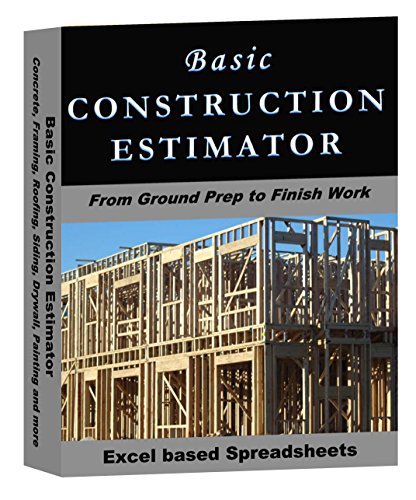 |
Basic Construction Estimator Labor and material estimates |
Check Price |
 |
2026 National Construction Estimator Current construction cost reference |
Check Price |
 |
National Construction Estimator 2018 Software plus reference material |
Check Price |
 |
Construction Project Management & Estimating for Beginners Learning estimating fundamentals |
Check Price |
Top 5 Construction Estimator Software: Detailed Reviews
1. MICOM Construction Estimator
Construction Estimator Software from MICOM Software is designed for straightforward project cost estimates based on your location. You can price sidewalks, driveways, foundations, and lumber for walls or roofing, with local cost information shaping the estimate. Its easy-to-use design suits users who want a practical way to calculate labor and material costs without a complicated workflow. Once your estimate is ready, you can email it, which makes sharing costs with clients or other project participants more convenient. It focuses on essential estimating tasks rather than broader construction management.
What We Like:
- Location-based costs can make estimates more relevant to your area.
- You can estimate several common projects, including sidewalks, driveways, and foundations.
- Lumber estimates cover both wall and roofing needs.
- The easy-to-use design should be approachable for basic estimating work.
- Emailing estimates makes it simpler to share completed cost information.
What Could Be Improved:
- Its listed project coverage is narrower than a full construction management platform.
- The available features focus on estimating rather than broader project tracking or management.
- Your results depend on selecting the correct location for the costs to be useful.
Buy it if you need a simple estimator for common projects and want location-based costs with easy email sharing. It suits users who value a focused workflow. Skip it if you need comprehensive project management, extensive project categories, or features beyond preparing and sending estimates.
2. Basic Construction Estimator
Basic Construction Estimator (Software) is Construction Estimator Software focused on producing accurate, professional labor and material estimates. Its core value is straightforward: you can prepare estimates around the two cost areas most bids need, helping you organise pricing for a project rather than relying on rough guesses. The software suits users who want a focused estimating tool instead of a broader construction platform. Because its stated feature set centres on labor and materials, it is best viewed as an estimating utility, not an all-purpose project-management system.
What We Like:
- It produces professional labor estimates for bid preparation.
- It produces professional material estimates for clearer cost planning.
- Its focused purpose may make estimating tasks easier to organise.
- It addresses the two core cost categories used in many construction bids.
What Could Be Improved:
- No location-based estimating feature is identified.
- No current construction cost reference material is identified.
- The available description does not indicate scheduling or project-management tools.
Buy it if you need a focused way to prepare professional labor and material estimates for construction bids. Skip it if you need location-adjusted pricing, built-in cost-reference material, or broader project-management features, since those capabilities are not identified in the available product information.
3. 2026 National Construction Estimator
2026 National Construction Estimator is the newest broad reference in this selection for current construction cost information. It suits you when you need a baseline for budgets, bid checks, or early feasibility work rather than a location-specific project estimate. As Construction Estimator Software, its main value is giving you a current cost reference to consult while building or reviewing numbers. That can help anchor conversations with clients and subcontractors, but the reference still needs your judgment about scope, local conditions, labor, materials, and project complexity.
What We Like:
- The 2026 edition gives you a current starting point for construction cost research.
- It can help you check whether bid figures seem plausible before moving ahead.
- The broad reference is useful for early budget planning and feasibility discussions.
- It gives you a shared reference for conversations with clients and subcontractors.
- It can complement a more detailed estimating workflow when you need cost context.
What Could Be Improved:
- It is a reference, not a substitute for project-specific takeoffs and scope review.
- You still need to adjust figures for local conditions and the actual job requirements.
- The available product details do not identify specific software features, so confirm that its workflow fits your needs before buying.
Buy it if you need the newest broad National Construction Estimator reference to ground budgets and review bids. Skip it if you want automated, location-based estimates, detailed labor-and-material inputs, or a guided learning course; the other picks in this selection target those needs more directly.
4. National Construction Estimator 2018
National Construction Estimator 2018 combines a construction estimating book with a free estimating software download, giving you two formats for working through bids. The book serves as reference material, while the included software provides a digital option for estimates. That pairing may suit you if you prefer checking information in print but want software for the estimating process. Its main limitation is the 2018 edition: construction costs and practices can change, so treat it as a dated reference rather than assume every figure reflects current conditions.
What We Like:
- Combines print reference material with downloadable software.
- Gives you both a physical reference and a digital estimating option.
- The free software download adds value beyond the book alone.
- Works well for learners who prefer using multiple formats.
- Can support estimating practice without requiring a separate software purchase.
What Could Be Improved:
- The 2018 edition may not reflect current construction costs.
- The available details do not identify the software’s capabilities or system requirements, so compatibility is unclear.
- The book-and-software format may feel unnecessary if you only need current cost data.
Buy it if you want a book-and-software combination and can work with a 2018 reference. It suits learners or estimators who value print material alongside a downloadable tool. Skip it if you need current cost information, detailed software specifications, or a standalone modern estimating platform.
5. Construction Project Management & Estimating for Beginners
Construction Project Management & Estimating for Beginners is a two-in-one guide for learning estimates, project bids, and execution. If you are comparing Construction Estimator Software, this book can help you understand the work behind the numbers before choosing a digital tool. Its focus on estimating fundamentals makes labor, materials, bid preparation, and project progression easier to consider as connected steps. The beginner-oriented format should suit readers who need a structured introduction, though the available information does not identify specific software, templates, calculators, or advanced estimating methods.
What We Like:
- It connects estimating with project bids and execution rather than treating pricing as an isolated task.
- The beginner focus should make core estimating concepts easier to approach.
- It can help new contractors or project staff understand the sequence from estimate to completed work.
- The two-in-one format keeps estimating and project management fundamentals together.
- It offers a useful foundation before you adopt dedicated estimating tools.
What Could Be Improved:
- It may be too basic for experienced estimators who need advanced techniques or detailed cost data.
- The listing does not specify included templates, examples, software tools, or other practical resources.
- You may still need a current cost reference or estimating platform for real project pricing.
Buy it if you are new to construction estimating, project bids, or basic project management and want one introductory resource covering the full workflow. Skip it if you need current regional costs, advanced estimating guidance, software functionality, or detailed professional templates.
How To Choose Construction Estimator Software
The right Construction Estimator Software should help you produce bids that are consistent, understandable, and suited to the work you actually perform. Start by identifying your estimating routine: do you mainly need quick labor and material calculations, location-based pricing, a cost reference, or guidance while learning the basics? A focused tool may serve you better than a broader system with features you will not use.
Construction Estimator Software features
Check how the software handles labor, materials, equipment, subcontractor costs, overhead, and markup. You should be able to separate direct costs from indirect expenses and adjust quantities without rebuilding the entire estimate. Clear cost categories and editable inputs matter more than a long feature list because they make errors easier to spot before you submit a bid.
Cost data and regional relevance
Construction prices vary by location, project type, and timing, so ask where the tool’s data comes from and how often it is updated. A national reference can provide useful benchmarks, but it may not match your local market without adjustments. If location-based estimating matters to your business, prioritise a tool that supports regional inputs or makes local changes straightforward.
Ease of use and learning curve
Consider who will use the estimator and how much training they need. A simple interface can speed up routine bids, while instructional material may be more valuable if you are still learning estimating fundamentals. Look for clear terminology, sensible workflows, and the ability to review the calculation behind each total rather than accepting a figure you cannot explain.
Output, flexibility, and fit
Before choosing, confirm that the tool supports the way you present bids. You need readable estimates that can be checked, revised, and shared with the people involved in pricing and project decisions. Also consider whether you need a standalone reference, dedicated estimating software, or a combination of both. The best purchase is the one that matches your project scale, estimating frequency, and confidence with cost calculations, not necessarily the most comprehensive option.
Which Construction Estimator Software Should You Choose?
MICOM Construction Estimator is the best overall pick for users who want location-based project estimates, making regional relevance its clearest advantage. Basic Construction Estimator is the best alternative if your priority is straightforward labor and material estimating. Choose the first for location-focused work and the second for a simpler cost breakdown, while the other options suit current reference needs, combined software and reference use, or learning estimating fundamentals.

Hi, I’m Larry Fish, the mind behind MyGrinderGuide.com.. With a passion for all things kitchen appliances, I created this blog to share my hands-on experience and expert knowledge. Whether it’s helping you choose the right tools for your culinary adventures or offering tips to make your kitchen more efficient, I’m here to guide you. My goal is to make your time in the kitchen not only easier but also enjoyable! Welcome to my world of kitchen mastery!