
As an Amazon Associate I earn from qualifying purchases.
When you travel beyond reliable cell coverage, a standard smartphone may not give you a dependable way to call for help or update family. The right emergency communicator depends on whether you need satellite messaging, local group contact, or extra protection around water.
Look at coverage, messaging features, navigation tools, durability, battery practicality, and how many people need to stay in touch. Remember that several satellite communicators require an active subscription, while FRS radios are designed for local communication.
These picks were selected from the listed features, with each product serving a different use rather than repeating colour or size variants. The lineup includes premium satellite messaging, navigation, simple GPS-based check-ins, waterproof radios, and a straightforward rechargeable walkie-talkie option.
Use the quick comparison first, then read the individual reviews and buying guide to narrow down the best fit for your trips, household, or emergency kit.
Our Top 5 Emergency Communication Devices Picks at a Glance
| Product | ||
|---|---|---|
 |
Garmin inReach Mini 3 Plus Premium remote-area communication |
Check Price |
 |
Garmin inReach Mini 2 Navigation-focused satellite safety |
Check Price |
 |
ZOLEO Satellite Communicator Simple satellite check-ins |
Check Price |
 |
Motorola T605 H2O Talkabout Water-focused group communication |
Check Price |
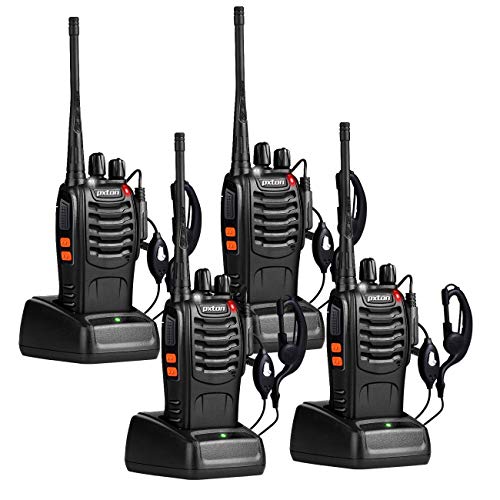 |
pxton Rechargeable Walkie Talkies Simple local team communication |
Check Price |
Top 5 Emergency Communication Devices: Detailed Reviews
1. Garmin inReach Mini 3 Plus
The Garmin inReach Mini 3 Plus is a premium Emergency Communication Devices pick for remote trips where cell service disappears. It uses the Iridium satellite network for two-way text, voice and photo messaging, while an interactive SOS sends your location to Garmin Response, a 24/7 coordination center. Its rugged, scratch-resistant color touchscreen is rated IP67 and designed for harsh weather, impacts and temperature extremes. The rechargeable battery can last up to 350 hours with 10-minute tracking. LiveTrack can share your route, distance, elapsed time and elevation with others.
What We Like:
- Interactive SOS connects you with a 24/7-staffed coordination center.
- Two-way voice and text messaging work beyond cell coverage.
- The color touchscreen should be easier to use than a basic text-only interface.
- The IP67-rated build suits wet, rough and unpredictable conditions.
- Long battery life supports extended trips with regular tracking.
What Could Be Improved:
- An active satellite subscription is required to use its satellite communication features.
- Photo messaging requires a compatible smartphone and the Garmin Messenger app.
- The device may be more capability than you need for occasional local communication.
Buy it if you travel beyond reliable cell coverage and want one rugged device for SOS, tracking, voice, text and photo messaging. It suits hikers, boaters and remote-area travelers who value broader communication options. Skip it if you only need nearby group communication or do not want an active satellite subscription.
2. Garmin inReach Mini 2
The Garmin inReach Mini 2 is a compact satellite communicator for remote trips beyond cell service. Emergency Communication Devices like this can provide two-way messaging and interactive SOS globally, but an active satellite subscription is required. TracBack routing helps you return along your route, while the digital compass provides heading information even when you are standing still. You can share your location through MapShare or message coordinates, and sync the device with the Garmin Explore app for trip planning, topographical mapping, waypoints, courses, activities, and collections on a compatible smartphone.
What We Like:
- Interactive SOS supports communication during an emergency.
- TracBack routing helps you retrace your route to your starting point.
- The digital compass gives heading information without requiring movement.
- MapShare and message coordinates let you share your location with loved ones.
- Garmin Explore syncing supports trip planning and topographical mapping.
What Could Be Improved:
- An active satellite subscription is required for messaging, SOS, and location-sharing features.
- Some app features require a compatible smartphone, which adds another device to your kit.
- Satellite communicator use is regulated or prohibited in some jurisdictions.
Buy it if you travel beyond cell coverage and want messaging, SOS, route-back guidance, and compass information in one compact device. It suits hikers and remote travelers who will maintain a satellite subscription. Skip it if you only need short-range local communication or do not want subscription-dependent features.
3. ZOLEO Satellite Communicator
The ZOLEO Satellite Communicator is one of the more straightforward Emergency Communication Devices for hiking, camping, and travel beyond cell coverage. Pair it with your smartphone to send check-ins, share your location, and trigger SOS immediately with one button press, without a countdown delay. SOS connects you to a 24/7 emergency monitoring centre, while Medical Assist offers non-emergency help. Its dedicated ZOLEO SMS number and email let contacts reach you off-grid, and USB-C charging works with common cables, power banks, and car chargers.
What We Like:
- Immediate SOS activation avoids a countdown when you need emergency help.
- Check-ins and location sharing make it easier for contacts to follow your trip.
- A 24/7 emergency monitoring centre handles SOS alerts.
- The dedicated SMS number and email let contacts reach you off-grid.
- USB-C charging works with many cables, power banks, and car chargers.
What Could Be Improved:
- You need to pair the communicator with a smartphone for the main ZOLEO experience.
- The optional Field Rescue Membership is an additional add-on to consider.
- Contacts need your dedicated ZOLEO SMS number or email before they can reach you directly.
Buy the ZOLEO if you want simple off-grid check-ins, location sharing, and immediate SOS with a phone-friendly setup and USB-C charging. It suits hikers, campers, and travellers who value monitored emergency support. Skip it if you need local group radio communication or prefer not to pair devices with a smartphone.
4. Motorola T605 H2O Talkabout
The Motorola T605 H2O Talkabout is one of the more practical Emergency Communication Devices for groups staying near water or moving around a local area. Its IP67 waterproofing helps protect the radios, while the float-face-up design makes a dropped unit easier to spot and retrieve. A water-activated flashlight can provide immediate visibility after a splash or fall. You get license-free FRS operation, easy pairing, 22 channels, and 121 privacy codes, offering 2,662 channel-code combinations for finding a clearer option.
What We Like:
- IP67 waterproofing suits wet outdoor use.
- The face-up floating design makes a dropped radio easier to recover.
- The water-activated flashlight adds useful visibility around water.
- License-free FRS operation keeps setup straightforward.
- Easy pairing and many channel-code combinations help groups coordinate.
What Could Be Improved:
- These are local-range FRS radios, not satellite communicators for remote-area contact.
- The water-focused design may be unnecessary if you rarely use radios near water.
Buy the Motorola T605 H2O Talkabout if your group needs simple, license-free communication around lakes, boats, campsites, or other wet settings. The floating design and water-activated flashlight are practical safety additions. Skip it if you need long-distance emergency contact, since this is a local two-way radio rather than a satellite device.
5. pxton Rechargeable Walkie Talkies
For local groups, these Emergency Communication Devices offer straightforward two-way contact without relying on a phone signal. The pxton radios provide 16 selectable channels, so a team can choose a shared channel and keep communication organized. Rechargeable 1500 mAh batteries support up to 8–12 hours of continuous use, though runtime varies with frequency of use. Their compact, lightweight housings are rainproof and designed for multiple settings, while the built-in flashlight adds useful backup visibility. The package includes four radios, charging stations, belt clips, earpieces, hand straps, and a manual.
What We Like:
- Four radios make this practical for small teams or family groups.
- The 16 channels give you flexibility when one channel is busy.
- Rechargeable batteries reduce the need for disposable cells.
- Earpieces support more discreet, hands-free communication.
- The built-in flashlights add a useful function during low-light situations.
What Could Be Improved:
- Range can drop substantially around buildings and other obstacles.
- Continuous use is limited to about 8–12 hours, and actual battery life varies.
- These radios are suited to local communication rather than satellite contact in remote areas.
Buy these if you need a simple, rechargeable radio set for local teams, outdoor groups, events, or household emergencies. The four-radio package and included accessories add practical value. Skip them if you need satellite messaging, navigation, or dependable communication far beyond obstacles and ordinary radio coverage.
How To Choose Emergency Communication Devices
Match coverage to your route
Emergency Communication Devices differ most in where they work. Decide whether you need contact beyond mobile coverage or only communication across a campsite, work site, or vehicle group. Satellite equipment suits remote-area safety, while local radios make more sense when everyone stays within a limited area. Do not pay for remote coverage if your trips rarely leave reliable cellular service, but do not rely on short-range radios for isolated travel.
Choose the type of contact you need
Think about what an emergency message must accomplish. Two-way text-style communication can be useful when you need to share clear details without speaking, while voice communication can be faster for a group coordinating nearby. Some devices also emphasise check-ins, so consider whether you mainly want routine reassurance or a way to communicate during a developing problem. A device that matches your usual conversations will be easier to use under pressure.
Prioritise navigation or communication
If route-finding is central to your trips, look for a device designed around navigation as well as safety communication. If your priority is contacting people in remote areas, focus on the communication experience instead. These goals overlap, but they are not identical. Review the controls and message process before buying, and make sure you can use the important functions without relying on a complicated setup.
Consider water, groups, and power
Your environment should shape the hardware you carry. Water-focused use calls for a device intended for that setting, while group travel may favour equipment designed for several people communicating locally. Check how the device is charged, how you will carry it, and whether its power needs fit the length of your outings. Also confirm any service, pairing, or account requirements before purchase, since an emergency tool is only useful when it is ready to operate.
Which Emergency Communication Device Should You Choose?
The Garmin inReach Mini 3 Plus is the best overall pick for premium remote-area communication because it is positioned as the most capable choice for staying connected away from normal coverage. The Garmin inReach Mini 2 is the best alternative if navigation-focused satellite safety matters more to you than the broader premium feature set. For simpler needs, the ZOLEO suits satellite check-ins, while the Motorola T605 H2O and pxton radios fit local or water-focused group communication.

Hi, I’m Larry Fish, the mind behind MyGrinderGuide.com.. With a passion for all things kitchen appliances, I created this blog to share my hands-on experience and expert knowledge. Whether it’s helping you choose the right tools for your culinary adventures or offering tips to make your kitchen more efficient, I’m here to guide you. My goal is to make your time in the kitchen not only easier but also enjoyable! Welcome to my world of kitchen mastery!