
Have you ever felt frustrated because your Sony A7III photos didn’t look as sharp as you imagined? You own one of the best cameras on the market, but the glass you attach to the front is what truly defines your image quality. Many photographers feel overwhelmed by the endless list of lenses available today. Between confusing acronyms, varying price tags, and different focal lengths, it is easy to feel paralyzed by the sheer number of choices on the shelf.
Choosing the wrong lens can waste your hard-earned money and hold back your creative growth. You might buy a lens that is too heavy for travel or one that fails to capture the crisp details you crave. You deserve gear that works as hard as you do, whether you are shooting portraits, stunning landscapes, or fast-paced street scenes.
In this guide, we will cut through the noise and highlight the best glass for your specific style. We have tested the top options to help you find the perfect match for your budget and your artistic goals. By the time you finish reading, you will feel confident in your next purchase and ready to take your photography to the next level. Let’s dive into our top picks for the best lenses for the Sony A7III.
Top Lenses For Sony A7Iii Recommendations

- Supreme lightweight portability that makes telephoto shooting fun
- Uncompromising image quality with 15 elements in 10 groups that lets you focus on creativity
- Up-close shooting performance (31.5" / 1:9.4 Wide & 59.1" / 1:5.1 Tele)
- Moisture-Resistant Construction

- Large F1. 8 maximum aperture enables beautiful defocusing effects
- 7-blade circular aperture creates beautiful defocused bokeh
- Compact, lightweight design Ideal for full-frame e-mount cameras
- Aspherical element controls spherical aberration and coma
- Double-gauss configuration suppresses field curvature & distortion

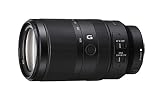
- Telephoto zoom with outstanding corner-to-corner G lens resolution
- Lightweight (22oz.) remarkably Easy to handle 5x super-telephoto zoom
- 70-350Mm (105-525mm full-frame equiv.) super-telephoto zoom
- Xd linear motor for fast, precise, quiet AF and tracking
- Optical SteadyShot image stabilization

- F2.0 Large Aperture: The F2.0 aperture also excels in low-light conditions—indoors, at dusk, or for night scenes—producing bright, clean images with excellent noise control. It's sharp and ready to use right from the widest aperture
- 0.74m Closer Focus: Discover Details: Get closer than standard 85mm lenses allow with a 0.74m minimum focus distance. Capture stunning close-ups and magnify subtle details. The optimized focus group ensures tack-sharp image quality whether you're shooting up close or at a distance, unlocking new creative possibilities
- Classic 85mm Focal Length: The 85mm focal length is the gold standard for portrait photography, offering natural perspective and flattering compression. Coupled with excellent distortion control, it's easy for beginners to create beautiful images and empowers pros to capture stunning portraits, close-ups, and street photography with that classic, timeless look
- Professional Control at Your Fingertips: Designed for efficiency, it features a customizable Fn button, a Click ON/OFF switch for the aperture ring (ideal for both photos and video), and a quick AF/MF mode switch. These controls give you seamless command over your shooting experience
- Reliable Weather Resistance: Don't let drizzles or dust stop your shoot. Built for reliability, this lens includes both a dust- and moisture-resistant seal at the lens mount and a water- and oil-repellent coating on the front element, offering extra protection for outdoor adventures

- Compact wide prime lens w/ stunning G Master bokeh and resolution
- F1.4 max aperture for extraordinary brightness and depth of field
- Two (XA) Extreme Aspheric elements for stunning resolution
- ED (Extra-low dispersion) glass element reduce chromatic aberration
- Nano AR coating II suppresses reflections, flare and ghosting. A fluorine front element coating plus a dust- and moisture-resistant

- World’s first 16.6x all-in-one zoom lens for APS-C mirrorless cameras
- Best-in-class, extremely fast and precise AF provided by VXD linear motor focus mechanism
- Maintains high resolving power from the center to the corners throughout the range
- Compact and portable design at 4.9 X 2.9 inches and a weight of just 21.9 ounces
- Moisture-Resistant Construction and Fluorine Coating

- Outstanding g lens resolution throughout the Zoom range
- 5x ED (extra-low dispersion) glass elements Reduces flare & ghosting
- Direct drive Supersonic Wave Motor for fast, quiet, precise focus
- Aspherical lens element dramatically reduces spherical aberration
- Nano AR coating suppresses Reflections, flare and ghosting

- Fast, quiet VXD linear motor for high-speed and high-precision autofocus
- MOD (Minimum Object Distance) of 7.1” at wide end and maximum magnification ratio of 1:2.7 for creative close-ups
- New design provides enhanced texture and greater user-friendliness
- Compact at 4.6" long and weighing just 19 oz
- Moisture-Resistant Construction and Fluorine Coating
The Ultimate Guide to Choosing Lenses for the Sony A7III
The Sony A7III is a powerful full-frame camera. To get the best photos, you need the right lens. This guide helps you pick the perfect glass for your gear.
1. Key Features to Look For
When shopping, focus on these three features:
- Aperture: A wide aperture (like f/1.8 or f/2.8) lets in more light. This helps you shoot in dark rooms and creates a blurry background.
- Focal Length: This number tells you how much you can see. A 35mm lens is great for streets. An 85mm lens is perfect for portraits.
- Autofocus Speed: The A7III has fast focus tracking. Choose lenses that keep up with this speed so your subjects stay sharp.
2. Important Materials
Lenses are made from a mix of glass, metal, and plastic. High-end lenses use specialized glass elements to stop color fringing. Metal barrels feel solid and durable. Some lenses include weather sealing. This rubber gasket keeps dust and rain out of your camera. If you shoot outside often, look for this feature.
3. Factors That Affect Quality
Several things change how your photos look:
- Lens Elements: Extra glass elements reduce blurry edges. They make your image look crisp from corner to corner.
- Coatings: Special coatings prevent “lens flare.” This happens when sunlight hits the glass and creates weird spots. Good coatings keep your contrast high.
- Image Stabilization: Some lenses have built-in stabilization. This works with the camera sensor to keep your shots steady when you hold the camera by hand.
4. User Experience and Use Cases
Think about what you like to photograph.
- Travel: A zoom lens like the 24-105mm is very versatile. You can zoom in and out without changing lenses.
- Portraits: Prime lenses (non-zoom) are the best here. They make people look great and blur the background softly.
- Vlogging: A wide-angle lens, like a 16-35mm, fits more into the frame. It is perfect for selfie-style videos.
10 Frequently Asked Questions
Q: Can I use older Sony lenses on the A7III?
A: Yes, you can use Sony E-mount lenses. If you use A-mount lenses, you might need an adapter.
Q: What does “FE” mean on a lens name?
A: FE stands for “Full-frame E-mount.” These lenses are built specifically for the A7III sensor.
Q: Do I need a lens hood?
A: A lens hood blocks stray light. It also protects the front glass from accidental bumps.
Q: Is a prime lens better than a zoom lens?
A: Prime lenses are often sharper and smaller. Zoom lenses are more flexible because they cover many focal lengths.
Q: How do I clean my lens?
A: Use a soft microfiber cloth and a lens cleaning pen. Never use paper towels, as they can scratch the glass.
Q: Why is the background blurry in some photos?
A: This is called “bokeh.” It happens when you use a wide aperture, like f/1.4 or f/2.8.
Q: Are third-party lenses good?
A: Yes! Brands like Sigma and Tamron make excellent lenses for the Sony A7III at lower prices.
Q: Does the lens weight matter?
A: Yes. A heavy lens can make your neck tired after a long day of shooting.
Q: What is a “macro” lens?
A: A macro lens allows you to focus very close. It is perfect for tiny details like insects or flowers.
Q: Should I buy a lens filter?
A: A UV filter helps protect your front glass from scratches and dirt.

Hi, I’m Larry Fish, the mind behind MyGrinderGuide.com.. With a passion for all things kitchen appliances, I created this blog to share my hands-on experience and expert knowledge. Whether it’s helping you choose the right tools for your culinary adventures or offering tips to make your kitchen more efficient, I’m here to guide you. My goal is to make your time in the kitchen not only easier but also enjoyable! Welcome to my world of kitchen mastery!