
As an Amazon Associate I earn from qualifying purchases.
Choosing the right open source database can be overwhelming. You need reliability, scalability, and tools that fit your workflow without locking you into proprietary systems.
What matters most is how well the database aligns with your project’s needs—whether you’re building a small app or managing large-scale data. Performance, community support, and ease of integration are key.
These picks were selected based on their practicality, depth of coverage, and real-world applicability. Each serves a distinct purpose, from hands-on guides to architectural insights.
Our Top 5 Open Source Database Picks at a Glance
| Product | ||
|---|---|---|
 |
PostgreSQL Up And Running By O’Reilly Advanced PostgreSQL users |
Check Price |
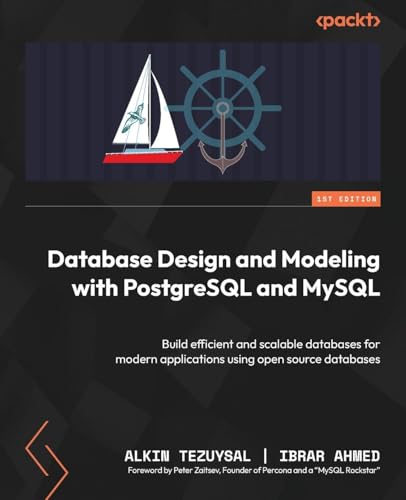 |
Database Design With PostgreSQL And MySQL By Packt Scalable database design |
Check Price |
 |
Architecting Apache Iceberg Lakehouse By Manning Scalable data platforms |
Check Price |
 |
Data Analysis With Open Source Tools By O’Reilly Data scientists and programmers |
Check Price |
 |
Working In Public By Stripe Press Open source community insights |
Check Price |
Top 5 Open Source Database: Detailed Reviews
1. PostgreSQL Up And Running By O’Reilly
PostgreSQL Up and Running is a practical guide for developers who want to master the advanced Open Source Database PostgreSQL. It covers installation, configuration, and optimization, helping you build robust, high-performance applications. The book dives into indexing, partitioning, and replication, giving you the tools to handle complex workloads efficiently.
What We Like:
- Clear explanations of PostgreSQL’s advanced features
- Practical examples for real-world applications
- Covers performance tuning and optimization
- Useful for both intermediate and advanced users
- Focuses on scalability and reliability
What Could Be Improved:
- Assumes prior PostgreSQL knowledge, not beginner-friendly
- Lacks in-depth coverage of newer PostgreSQL versions
Buy this if you’re an experienced developer looking to deepen your PostgreSQL skills. Skip it if you’re new to databases or need a basic introduction.
2. Database Design With PostgreSQL And MySQL By Packt
Database Design and Modeling with PostgreSQL and MySQL is a practical guide for building efficient databases using open source tools. It covers schema design, normalization, and performance tuning, helping you create scalable systems that handle real-world workloads. The book focuses on PostgreSQL and MySQL, two of the most widely used open source database systems, ensuring your solutions are both cost-effective and robust.
What We Like:
- Teaches core principles of database design applicable to modern apps
- Covers both PostgreSQL and MySQL for broader relevance
- Includes performance optimization techniques
- Practical examples for real-world scenarios
- Suitable for developers and teams scaling their databases
What Could Be Improved:
- Assumes some prior database knowledge
- Limited depth on advanced features of each database
Buy this if you need a hands-on guide to designing scalable databases with PostgreSQL or MySQL. Skip it if you’re already an expert or need a deep dive into niche features of a single system.
3. Architecting Apache Iceberg Lakehouse By Manning
Architecting an Apache Iceberg Lakehouse is a focused guide for building scalable data platforms using the open-source Apache Iceberg table format. It walks you through designing lakehouse architectures that combine the flexibility of data lakes with the reliability of data warehouses. You get practical insights into schema evolution, time travel, and partition evolution, which help you manage large datasets efficiently without sacrificing performance or consistency.
What We Like:
- Explains Apache Iceberg’s table format and its advantages for large-scale data
- Covers schema evolution and time travel for data versioning
- Provides actionable guidance on partition evolution and performance tuning
- Focuses on open-source tools, reducing vendor lock-in
- Balances theory with real-world implementation examples
What Could Be Improved:
- Assumes familiarity with data engineering concepts, which may exclude beginners
- Lacks hands-on exercises for practical reinforcement
Buy this if you’re a data engineer or architect working with large datasets and need a scalable open-source solution. Skip it if you’re new to data platforms or prefer vendor-specific tools over open standards.
4. Data Analysis With Open Source Tools By O’Reilly
Data Analysis with Open Source Tools is a practical guide for programmers and data scientists who want to leverage free, powerful tools for data processing. It covers essential libraries and frameworks, showing you how to clean, analyze, and visualize data without relying on proprietary software. The hands-on approach means you’ll apply techniques directly to real-world datasets, making it useful for both learning and immediate implementation.
What We Like:
- Focuses on practical, real-world data tasks
- Uses widely adopted open source tools
- Teaches data cleaning and visualization clearly
- Suitable for both beginners and experienced users
- Encourages hands-on learning with datasets
What Could Be Improved:
- Assumes some programming knowledge
- May not cover the latest tools in depth
Buy this if you need a no-nonsense introduction to open source data analysis tools. Skip it if you’re looking for advanced techniques or niche use cases.
5. Working In Public By Stripe Press
Working in Public explores the human side of open source software development, offering a deep look at how communities form, collaborate, and sustain projects. It breaks down the social dynamics behind successful open source databases and other tools, showing you what motivates contributors and how projects evolve beyond code. You get practical insights into governance, funding, and the often-overlooked challenges of maintaining public projects.
What We Like:
- Covers real-world examples of open source project growth and struggles
- Explains the role of community in shaping software direction
- Highlights the economic and social incentives behind contributions
- Provides actionable advice for maintaining long-term projects
- Written in an accessible, narrative-driven style
What Could Be Improved:
- Lacks technical depth on database-specific development
- Focuses more on community than code implementation
Buy this if you want to understand the people and processes behind open source databases. Skip it if you need hands-on technical guidance for building or optimizing a database.
How to Choose the Right Open Source Database for Your Needs
An Open Source Database should match your project’s scale and complexity. Start by assessing the workload: transaction-heavy applications need robust ACID compliance, while analytics-focused projects benefit from columnar storage or lakehouse architectures. PostgreSQL excels for structured data with strict consistency, but if you’re building a scalable data platform, Apache Iceberg’s table format may be the better fit.
Compatibility and ecosystem
Check how well the database integrates with your existing tools. PostgreSQL and MySQL have mature ecosystems with widespread support, but niche solutions like Apache Iceberg may require additional setup for full compatibility. If your team relies on specific frameworks or languages, prioritise databases with strong community or vendor-backed connectors.
Learning curve and documentation
Some Open Source Database options assume advanced knowledge. PostgreSQL’s documentation is extensive, but books like PostgreSQL Up And Running help bridge gaps for complex use cases. For teams new to database design, resources like Database Design With PostgreSQL And MySQL provide practical guidance. Evaluate whether the learning resources align with your team’s expertise.
Community and long-term support
The health of the open source community matters for troubleshooting and future updates. Projects with active contributors and clear governance, like PostgreSQL, offer stability. For insights into open source dynamics, Working In Public explores how communities shape software development. If long-term maintenance is a concern, favour databases with strong corporate or foundation backing.
Final Thoughts on Selecting an Open Source Database
PostgreSQL Up And Running is the best overall pick for developers needing a reliable, feature-rich Open Source Database. For scalable data platforms, Architecting Apache Iceberg Lakehouse is the strongest alternative, offering modern architecture for large-scale analytics.

Hi, I’m Larry Fish, the mind behind MyGrinderGuide.com.. With a passion for all things kitchen appliances, I created this blog to share my hands-on experience and expert knowledge. Whether it’s helping you choose the right tools for your culinary adventures or offering tips to make your kitchen more efficient, I’m here to guide you. My goal is to make your time in the kitchen not only easier but also enjoyable! Welcome to my world of kitchen mastery!